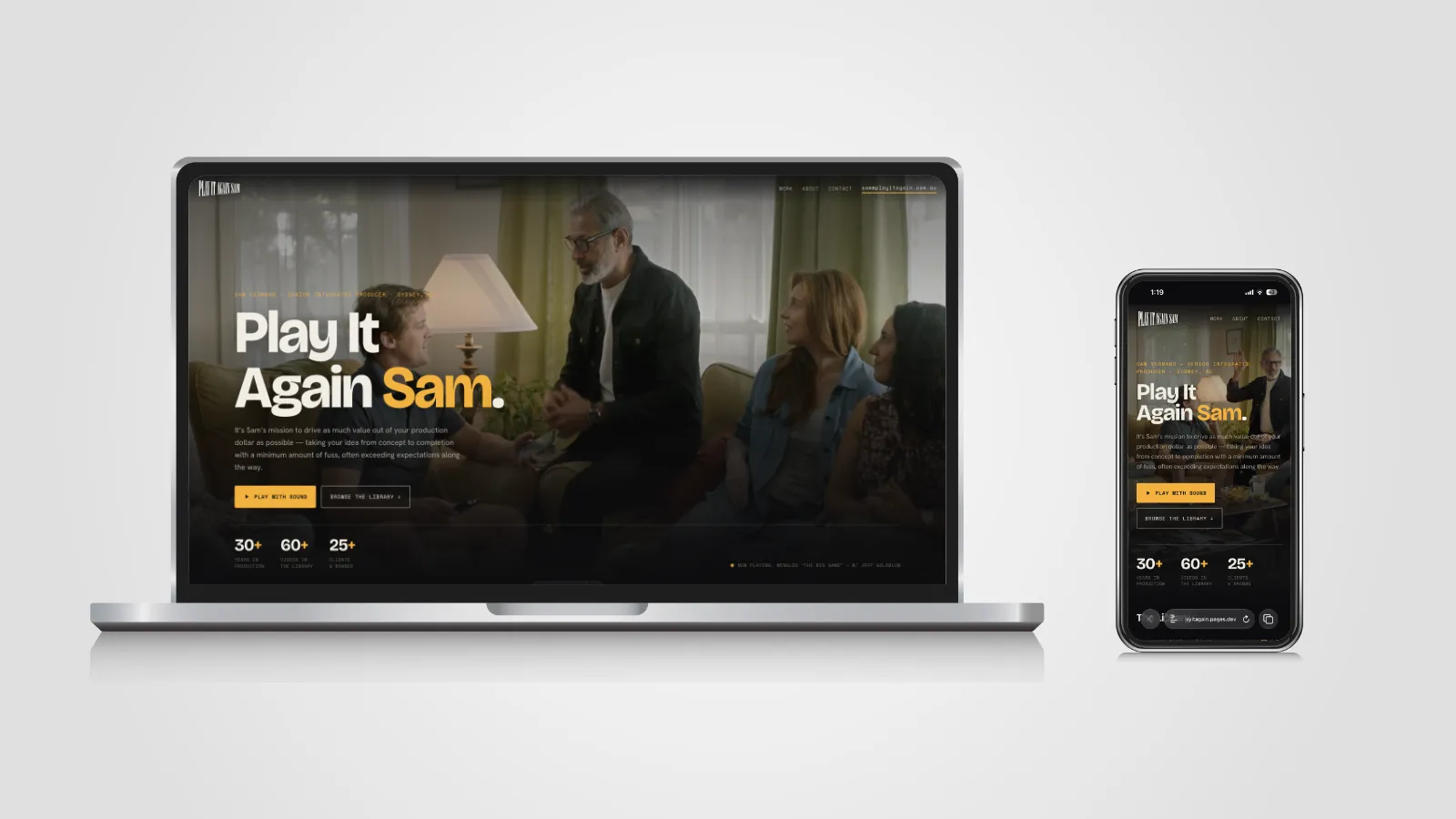
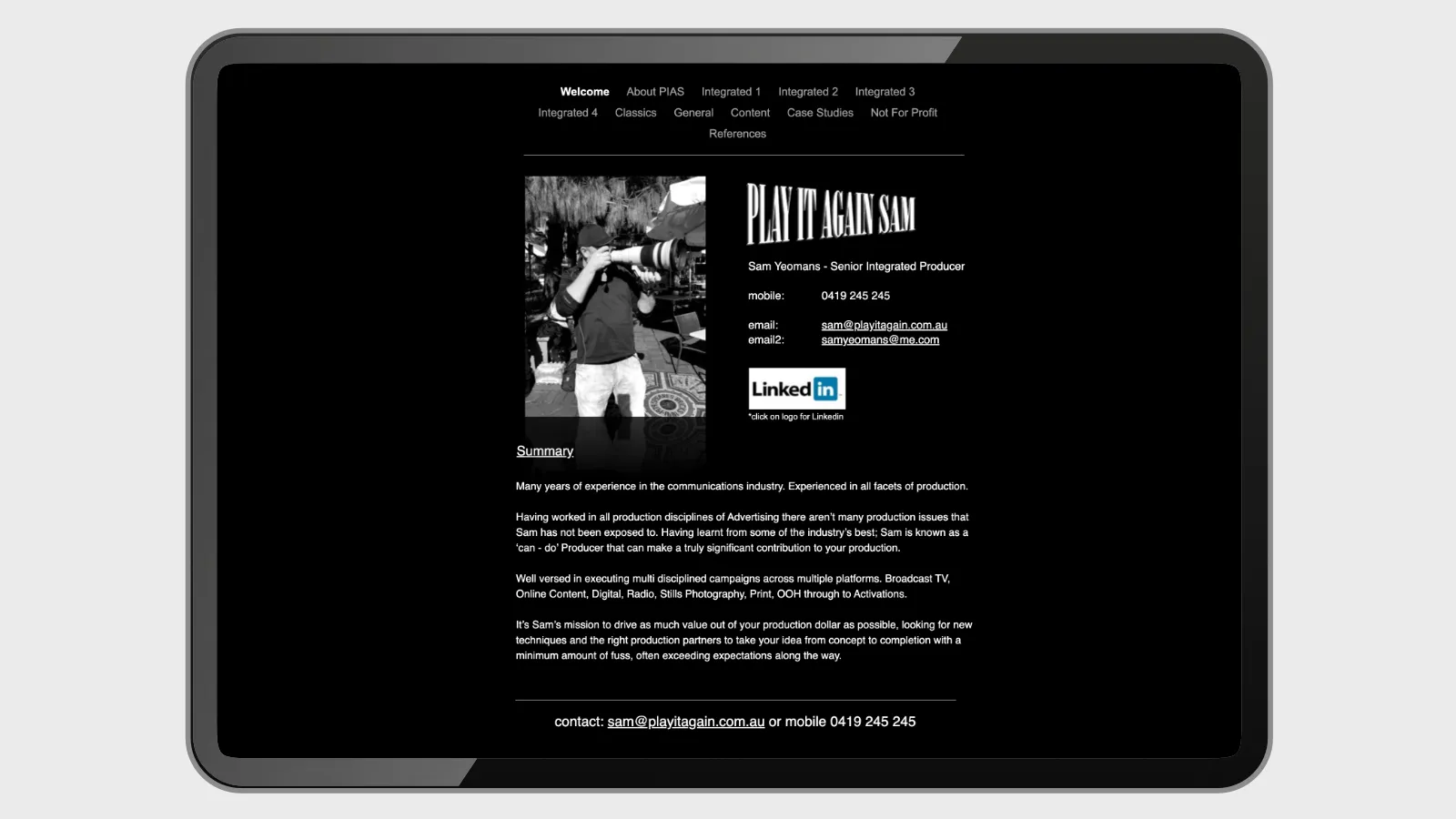
Sam Yeomans is a Senior Integrated Producer with more than thirty years of work behind him — TVCs, integrated campaigns, branded content and activations for Qantas, Menulog, Colgate, Big W, NRMA, Hungry Jack's and Channel Nine, made at agencies including Singleton, Ogilvy, Leo Burnett, Saatchi & Saatchi and George Patterson Y&R. All of it lived on a site built in Apple's iWeb, an application discontinued in 2011.
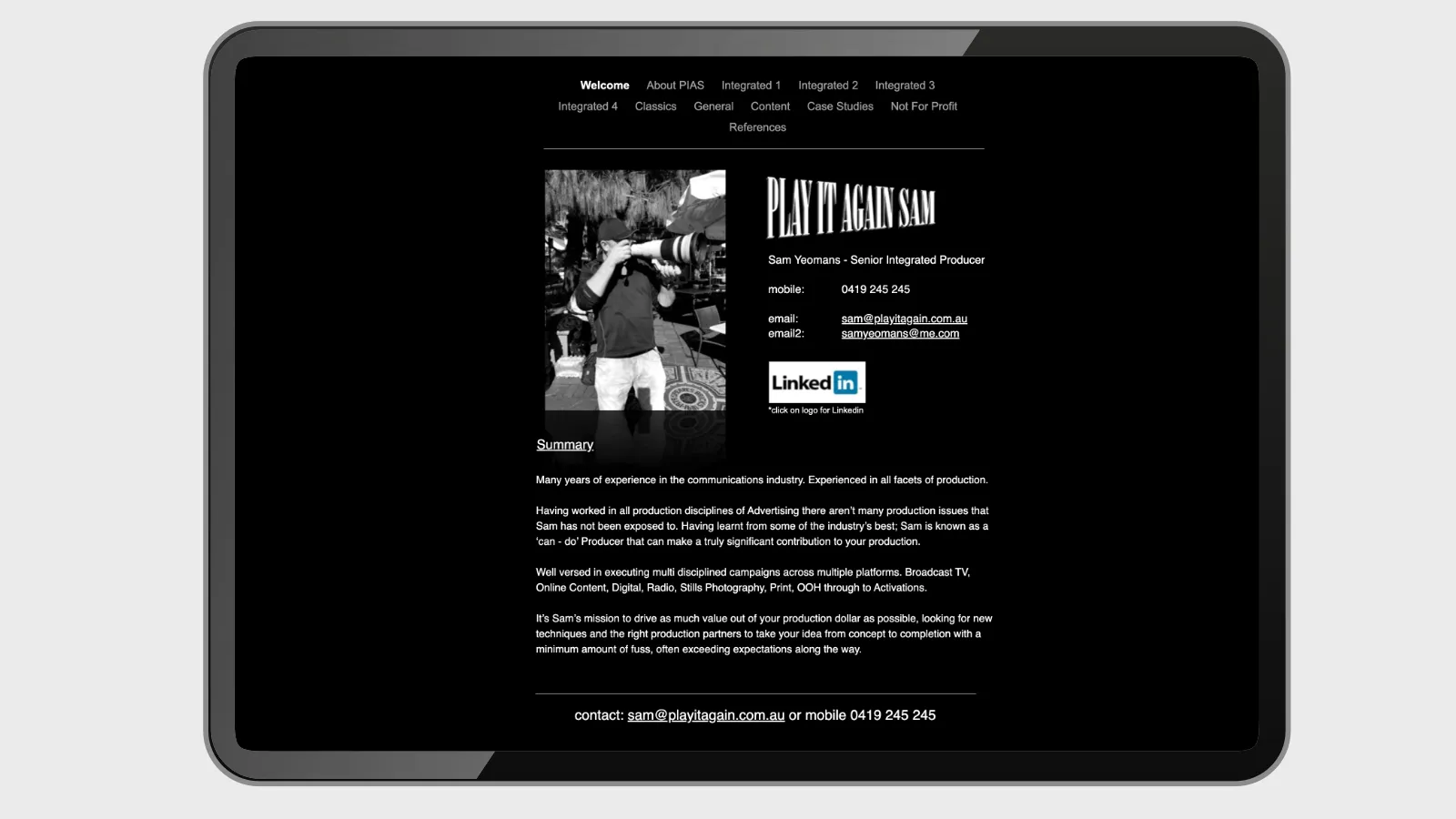
A career trapped in a dead application
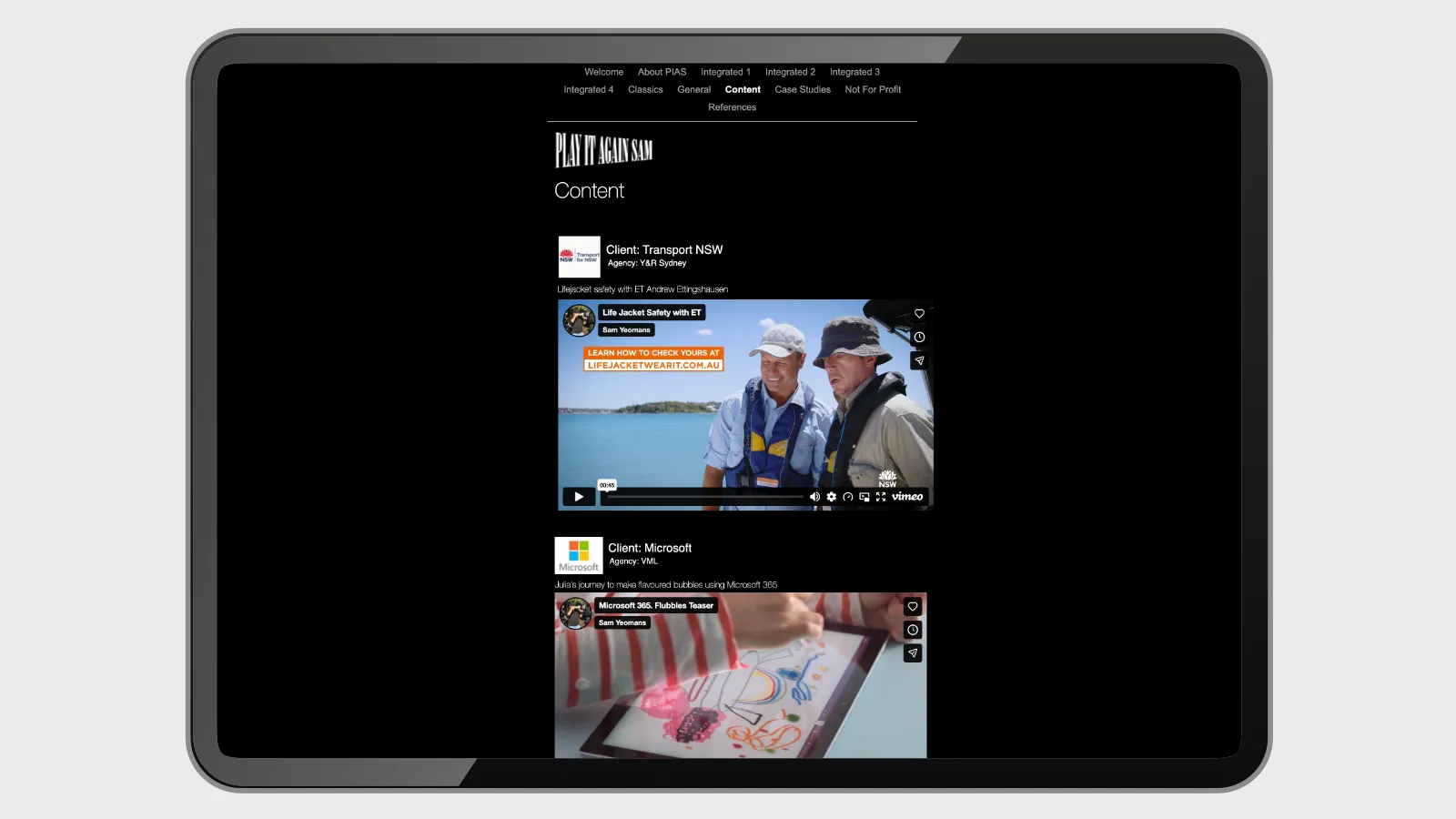
The problem wasn't that the old site looked dated — it was that the work was effectively invisible. iWeb generated fixed-width pages that predated the smartphone, so a producer's showreel was close to unusable on the device most people would open it on. Videos sat behind page loads and menu clicks, buried a few levels deep rather than being the first thing you saw. And because the tool no longer exists, every future edit was a dead end.
For someone whose entire value proposition is look at what I've made, the site was actively working against him. The brief I set myself was simple: make the video the interface, and make the whole thing editable long after I've handed it over.
Video first, from the first frame
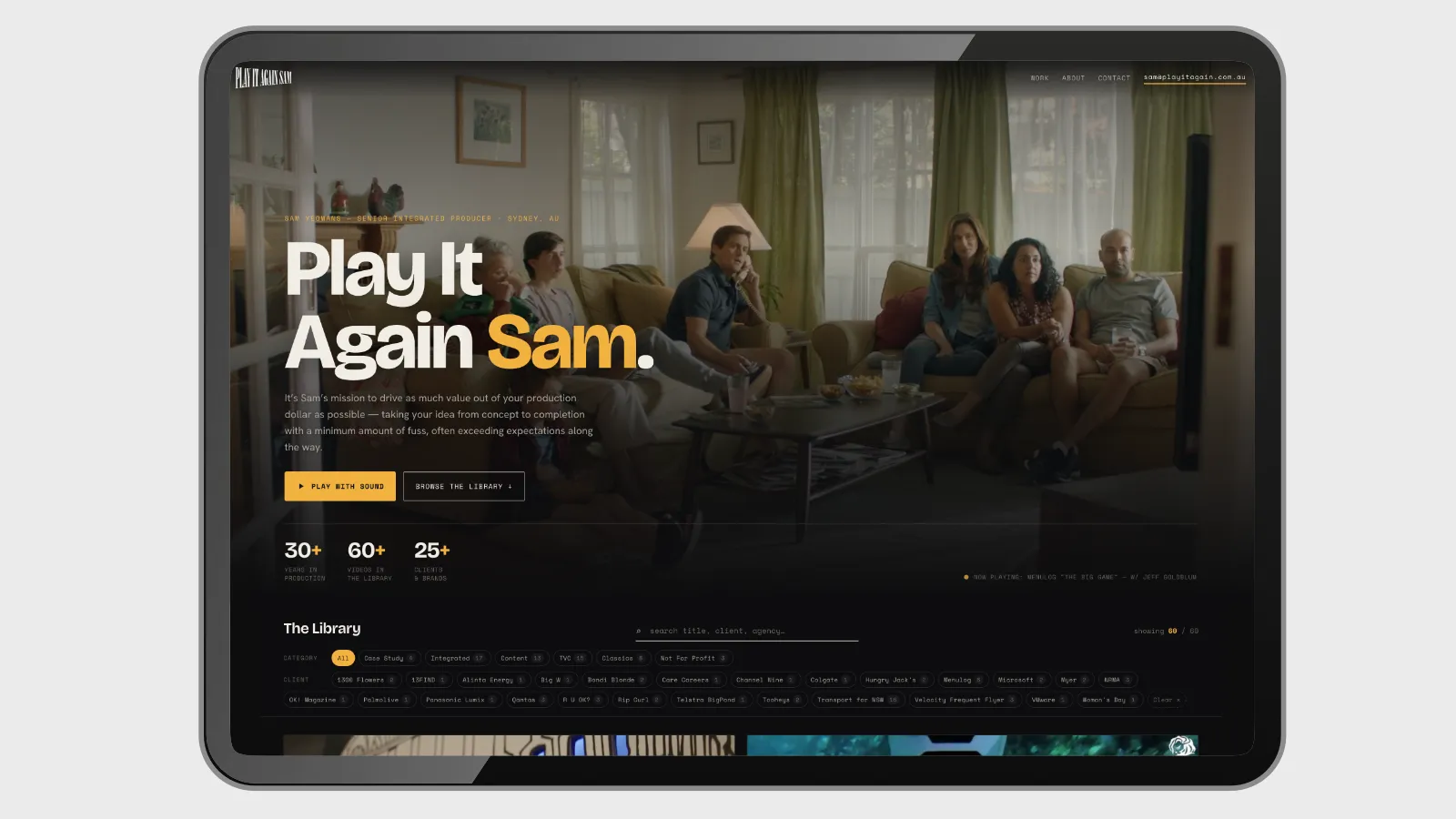
The site opens on a full-bleed video playing silently behind the masthead — currently Menulog's “The Big Game” with Jeff Goldblum — with a “Play with sound” control and a now-playing credit in the corner. Before you have scrolled or clicked anything, you have already seen the standard of the work.
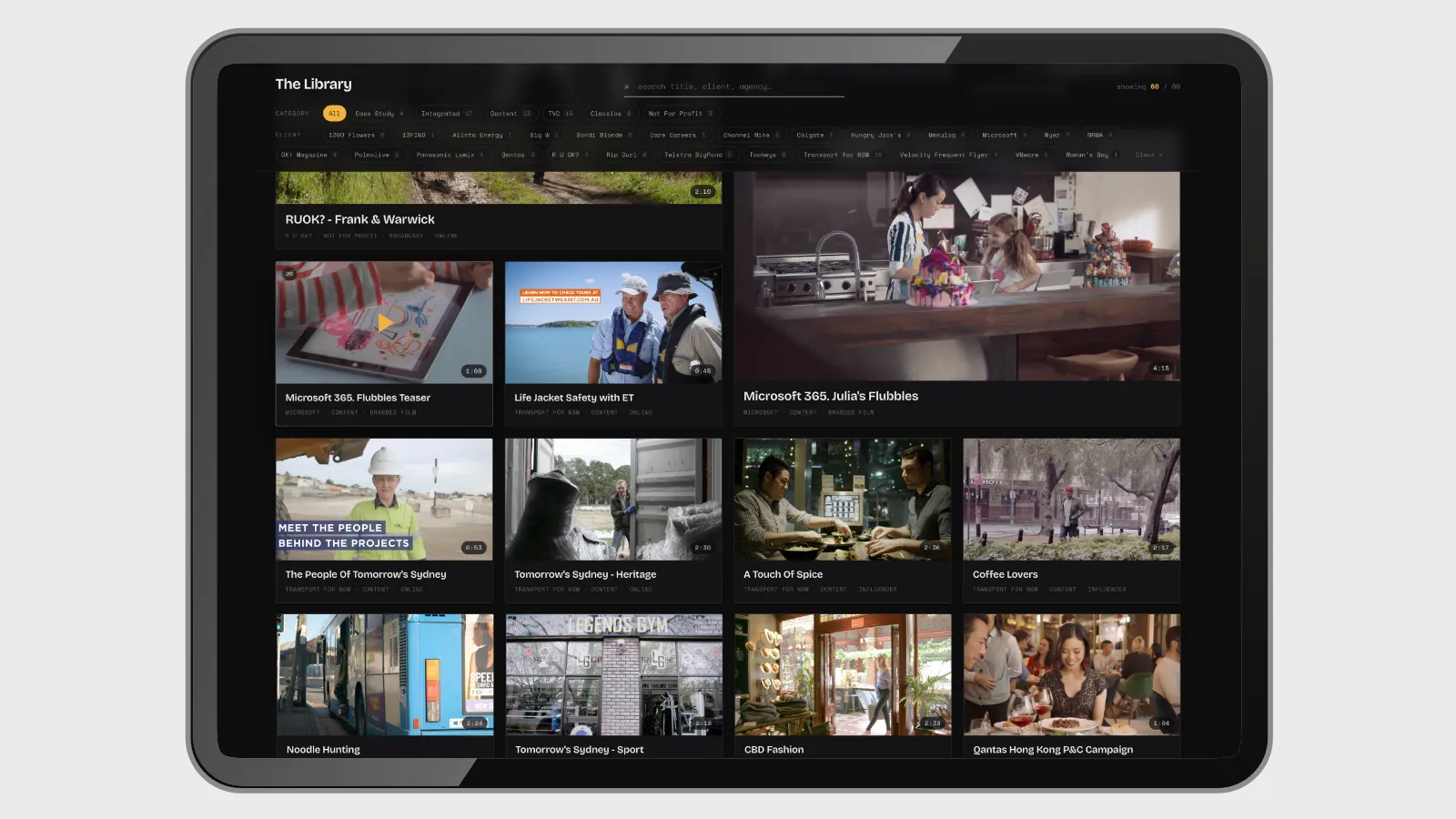
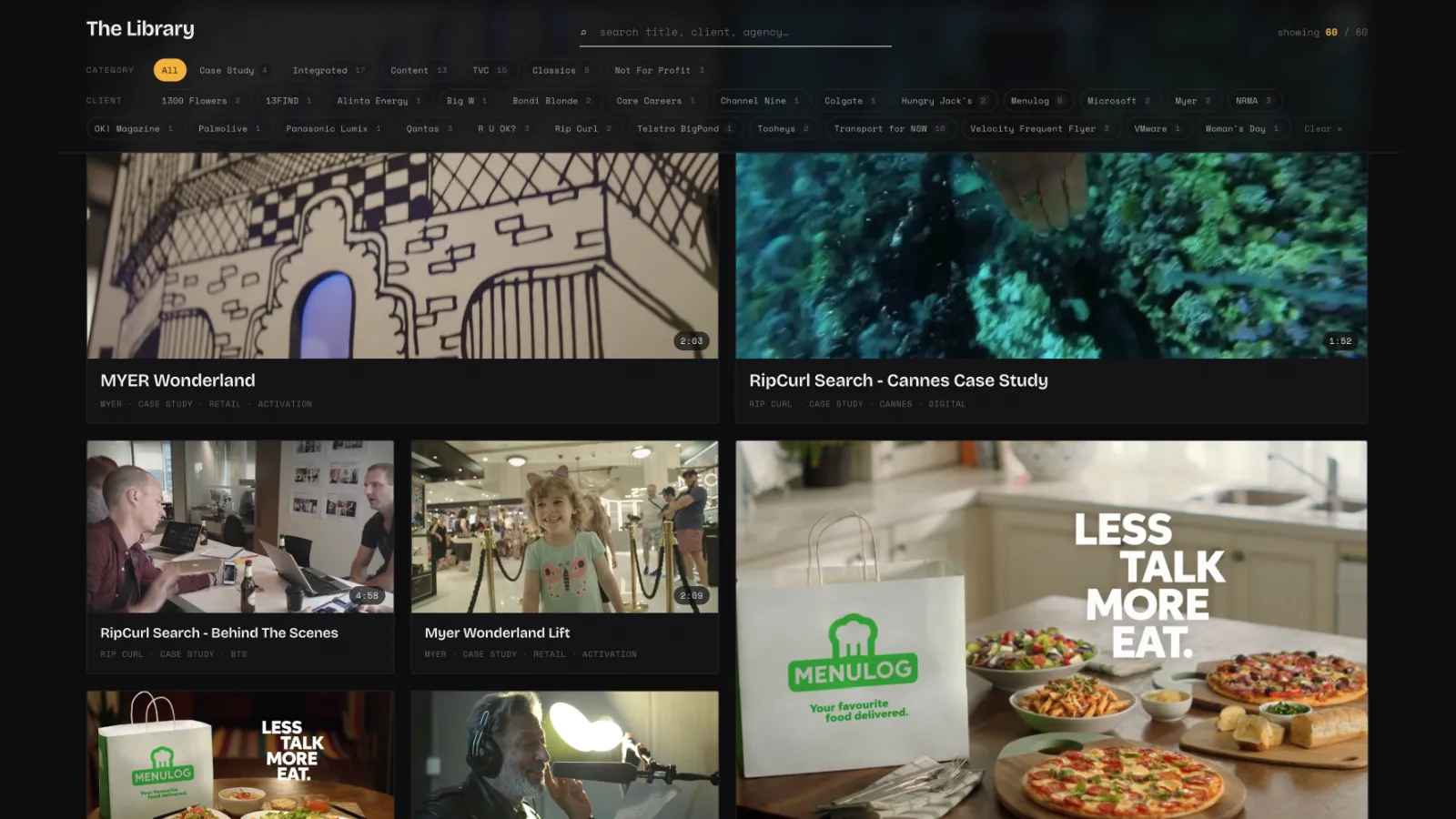
Below it sits the library: all sixty videos in one scrolling grid, no pagination and no submenus. Nine standout pieces render as double-width cards so the grid has rhythm and the best work carries more weight. Selecting any card opens it in a lightbox with its client, agency, campaign and description — you can move through an entire career without ever leaving the page.
Making thirty years navigable
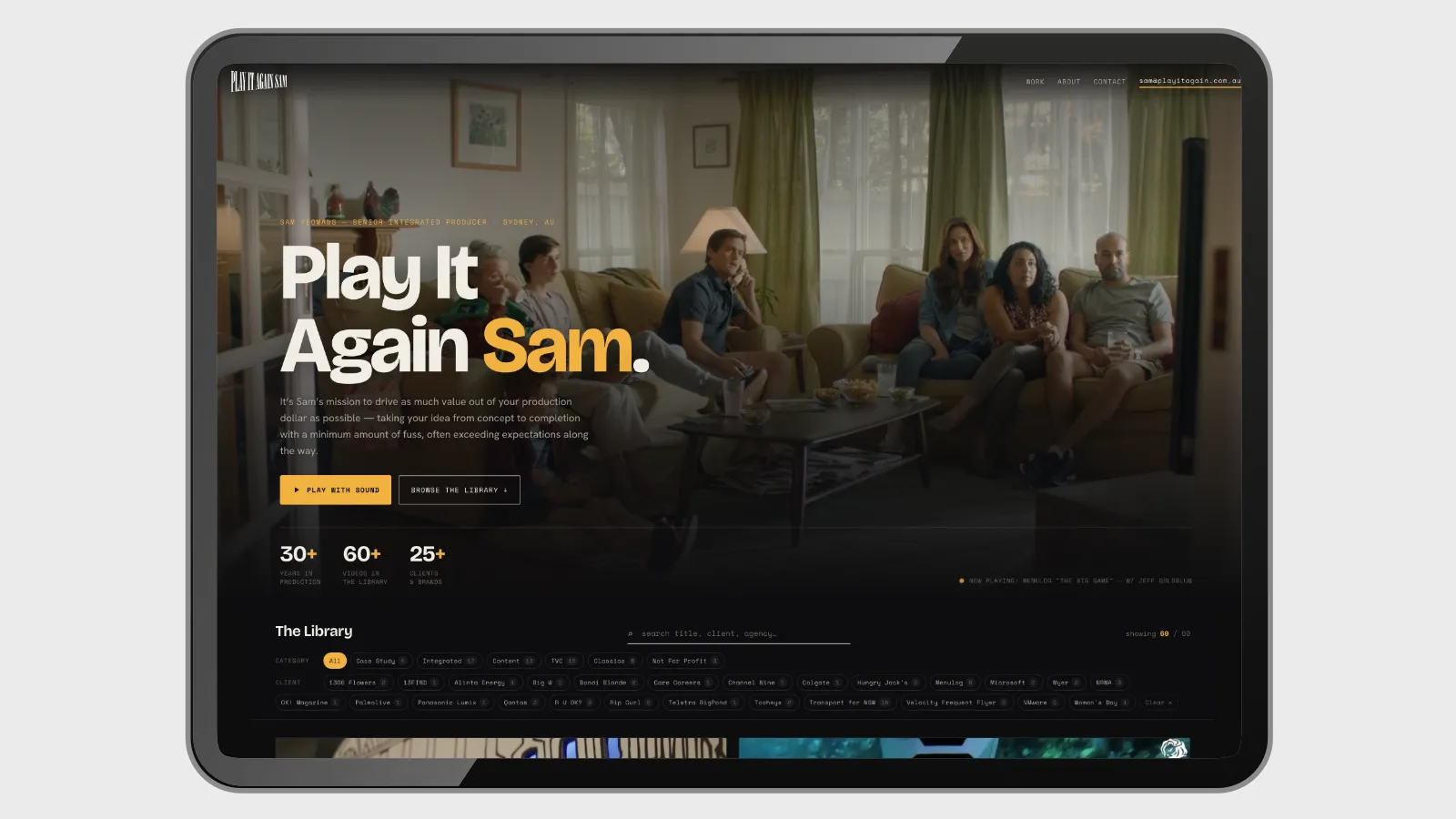
A sixty-video archive is only an asset if people can find their way around it. Every video carries structured metadata — client, agency, campaign, category, tags and duration — which drives live search and a filter bar that builds itself from the content. Six categories (Case Study, Integrated, Content, TVC, Classics and Not For Profit) sit alongside a chip for each of the twenty-five clients, every one showing its own count, so a visitor can jump straight to the retail work, or to everything made for Qantas, in a single tap.
This matters commercially. A producer being considered for a job is usually being assessed against a specific brief, and the filters let a prospective client answer “has he done this before?” in seconds rather than scrubbing through a reel hoping to spot something relevant.
Carrying the voice across
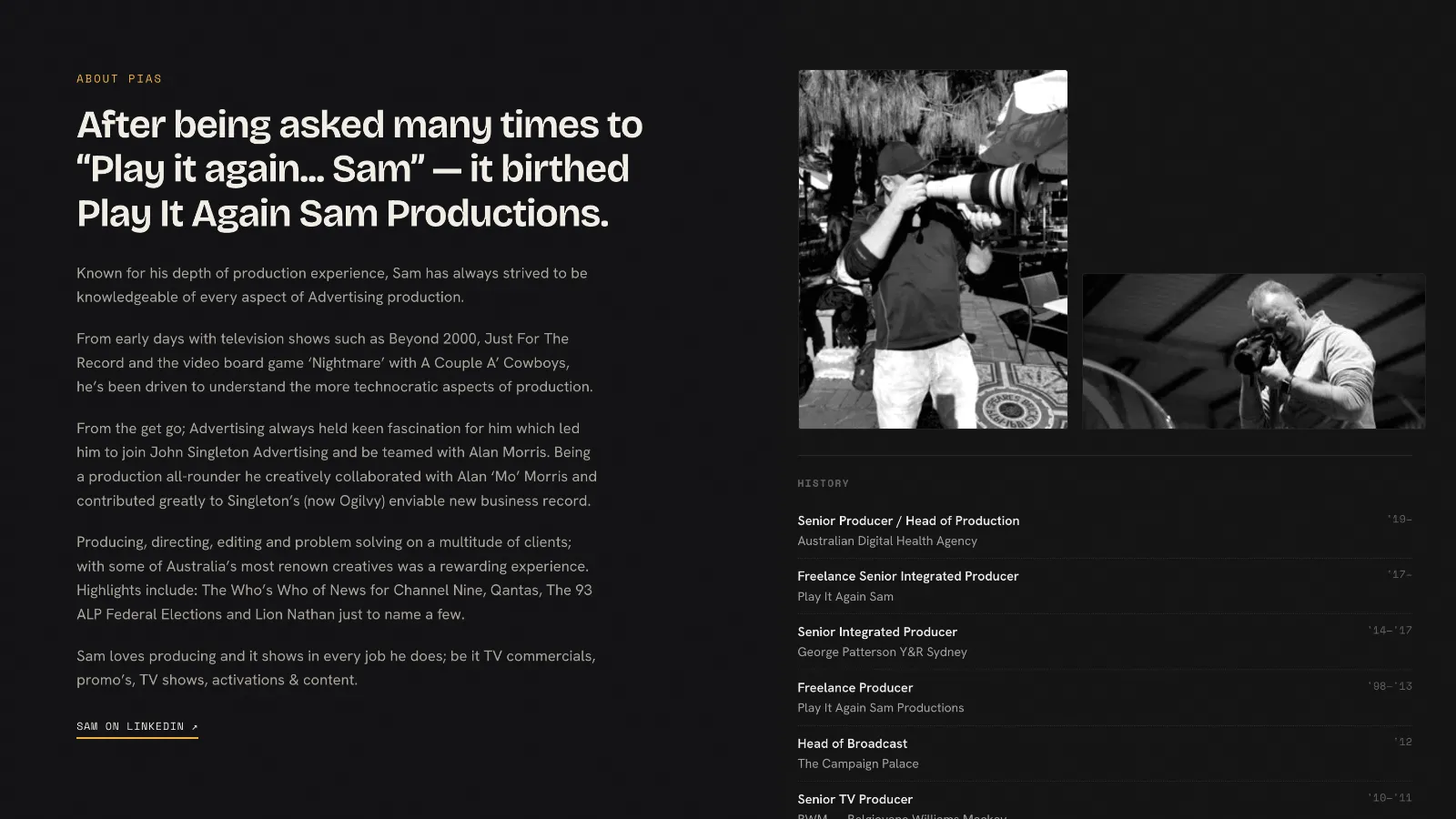
Every word of copy came across from the original site, including the origin of the name — after being asked one too many times to “play it again... Sam”. Rewriting it would have been the easy move and the wrong one: the phrasing is Sam's, it has been earning him work for decades, and the redesign's job was to give that voice a better stage, not to replace it.
The design is built to stay out of the way of the footage. A near-black ground lets thumbnails carry all the colour, with a single warm gold accent for emphasis, a wide grotesque for display type and a mono face for interface details — so the interface reads as a piece of production equipment and never competes with what's playing on it.
Built so it never goes stale again
The site is built in Astro and deployed on Cloudflare Pages, with videos hosted on Vimeo rather than served directly — Sam already had the library there, and it keeps playback and bandwidth someone else's problem. Each video is a single small JSON file, so adding next month's campaign means dropping in one file: the grid, the search index, the filter chips and their counts all update on their own.
That was the real deliverable. The previous site died because maintaining it depended on software that stopped existing. This one is plain files in a Git repository on an open framework — the failure mode that stranded thirty years of work the first time cannot happen the same way twice.